Myth: UN Calls for Small-Scale Organic Farming

Up till a few years ago, I used to make the natural assumption that organic farming must be better for the environment. Since then I realised that I should be relying on scientific evidence, not merely assumptions. On several occasions I’ve asked people (scientists, organic farmers and supporters) to point me in the direction of evidence on the environmental impacts and sustainability of organic farming. So far that quest hasn’t been very fruitful – I haven’t learned of many scientific papers that would really support that view.

What I have frequently been referred to are a few different kinds of documents instead. The United Nations Conference on Trade and Development (UNCTAD) 2013 report is one of them.

MYTH- UN calls for small-scale organic farming (1)

Continue reading

Posted in agriculture, biotechnology, organic | Tagged , , , | 17 Comments

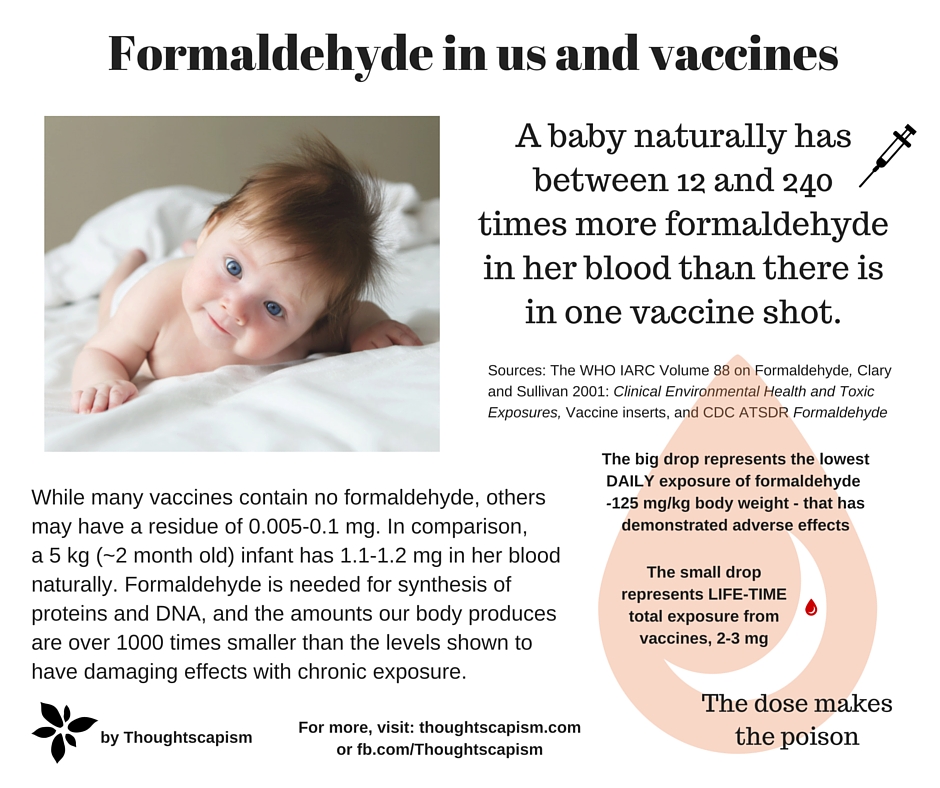
Should You Worry About Formaldehyde in Vaccines?

Bathing in a solution of formaldehyde would probably be bad for you, seeing as formaldehyde is classified as a human carcinogen – at least “under conditions of unusually high or prolonged exposure”, as reported by Cancer.gov formaldehyde fact sheet. And even low levels of formaldehyde in the air can result in a burning sensation in the airways and skin irritation – in fact inhalation is the most harmful route of exposure. From the FDA:

the highest risk is from the air when formaldehyde is inhaled from breathing, and occurs more frequently in people who routinely use formaldehyde in their jobs.

So people working with formaldehyde should be careful with how they handle it – like I used to do, when working with fixating cell samples for microscopy. But then again, formaldehyde on low levels in our cells is quite a different matter. It is necessary for the biosynthesis of amino acids, proteins, and nucleic acids (DNA). What levels are we talking about when it comes to vaccines? Even at maximum residue levels, less than one tenth of what is found in the blood volume of a baby.

For detailed sources, please see the end of this piece

For details, please see the end of the piece. Body weight calculated with a toddler/child 10-20 kg.

Continue reading

Posted in health, medicine, vaccines | Tagged , | 6 Comments

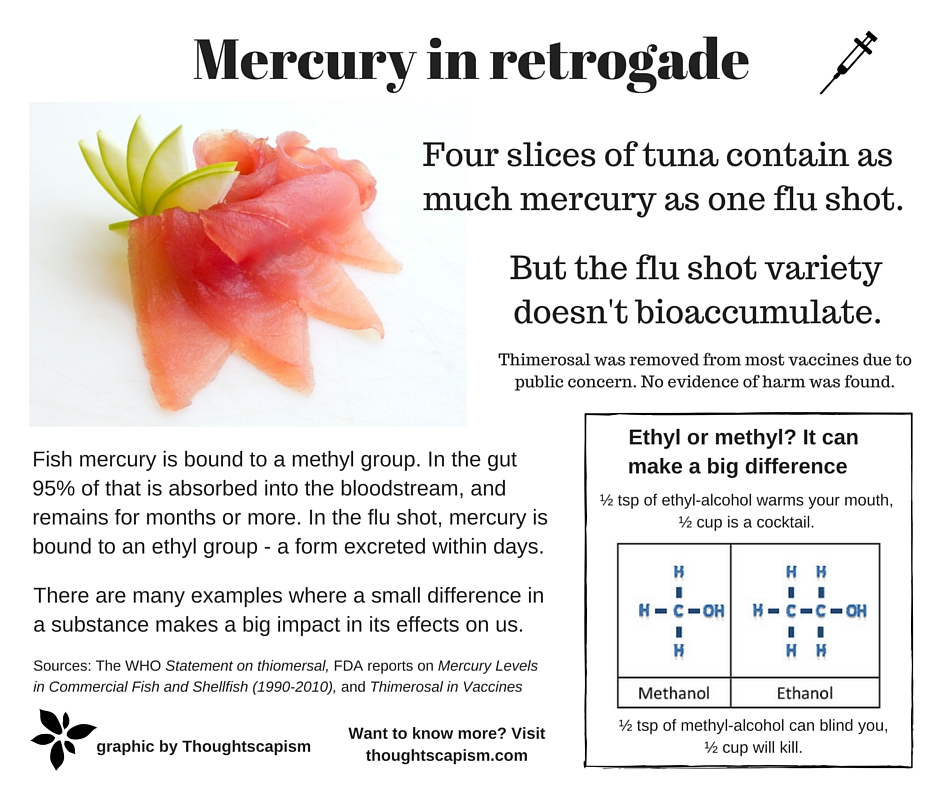
Mercury in Retrogade

Thimerosal (aka thiomersal) is a vaccine preservative that contains mercury. Many people fear mercury because of the known poisonous properties of methylmercury, although that is not the form found in thimerosal – when it dissociates it releases ethylmercury. Due to this precautionary fear, thimerosal was removed from childhood vaccines in 2002.

Please see end of this post for more details. Note - a methyl group per se is not a problematic element (or more problematic than an ethyl group). The effects of a compound always depend on the molecular context. Methylation of DNA and proteins are part of normal cell regulation, for instance.

Please see end of this post for details. Note – a methyl group is not a problematic element per se (or more problematic than an ethyl group). The effects of a compound always depend on the molecular context. Methylation of DNA and proteins is a part of normal and healthy cell regulation, for instance.

Continue reading

Posted in chemistry, health, vaccines | Tagged , | 7 Comments

Why It’s So Hard to Talk About GMOs

conflictThis piece was originally published on the Genetic Literacy Project. Genetic engineering of food is a controversial topic that stirs up a lot of emotions. How should we talk about it? Will anything we say make a difference?

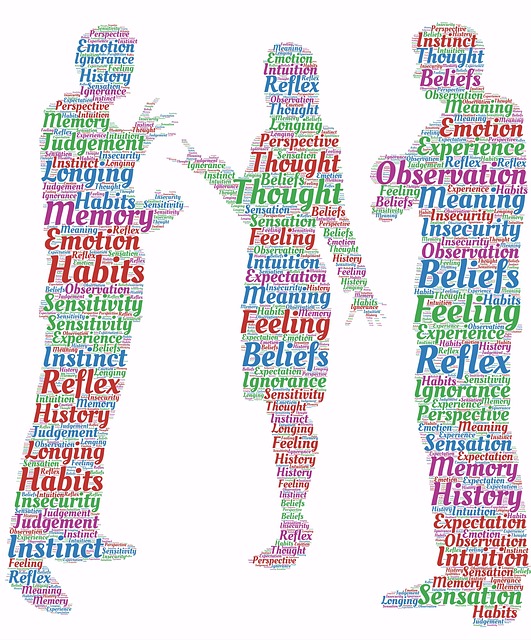
I think a useful perspective comes from framing the question somewhat differently: Can the way we behave in our interactions with others make a difference in how people consider controversial subjects?

Let me explain. When I first encountered harsh skepticism toward GMOs–at a Facebook mommy-group–I pasted several links to scientific sources to help address the participants’ concerns. All in a friendly manner. But the thread went south. The original poster called me a bully for posting five links during the discussion!). I was stunned. I stated that I was not trying to push my opinion on anyone but wanted to ground the discussion in science because the issue was so important. Some posters did not receive my comments well. Continue reading

Posted in agriculture, health, psychology, science communication | Tagged , , , , , , , , | Leave a comment

Three Ways Science Could Improve the World through Rice

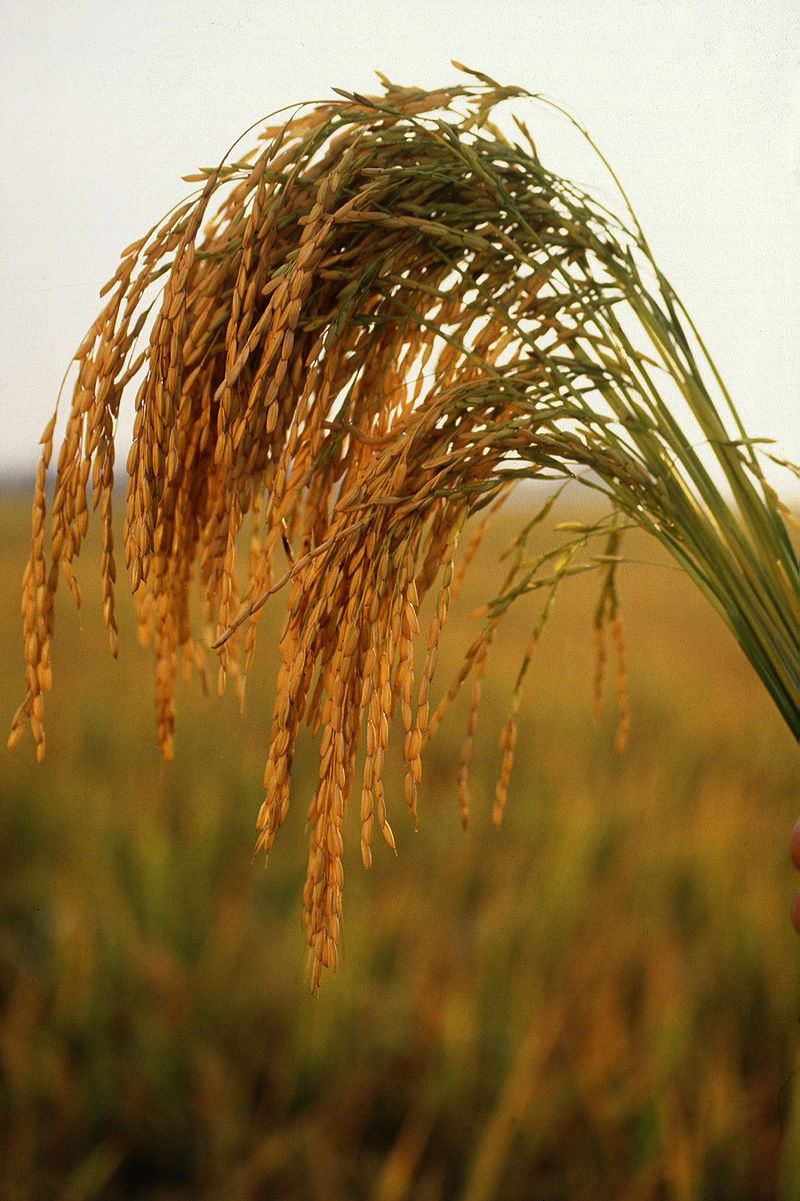
US_long_grain_rice

The culprit itself. From Wikipedia

Little did I know that rice, that innocent bag of grains sitting in my pantry, is warming the planet, inadvertently contributing to millions of deaths of women and children worldwide, and slowly poisoning me with arsenic. But I don’t want to contribute to fear-mongering, so let me be real: I probably don’t need to worry too much about the arsenic.

Before I came to that conclusion, I did some reading about what arsenic was doing in my rice. I learned that when FDA increased their testing of rice in the past 4 years, it found levels of arsenic at about 2.6 to 7.2 micrograms per serving. To put that in perspective, this is a value well above the allowed limit for arsenic in water – at least in concentration. If one serving of water is considered, a cup of water would need to have less Continue reading

Posted in agriculture, biology, climate, environment, health | Tagged , | 4 Comments

Plants Don’t Have Problems

As a preteen I wished that all humans would disappear from the planet and the beauty of nature would be left to flourish unhindered. I imagined I would be offered a big red button and I could annihilate the human race with a push (a spectacular technological feat at that, as it would not have any other effect on our planet). I knew which would have been the Right choice. The clear separation of ‘natural’ and ‘artificial’ or ‘man-made’ and their difference in value were obvious to me.

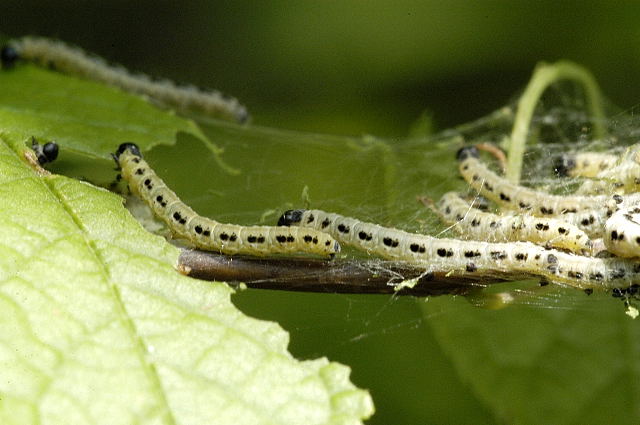
ermine caterpillars

Bird-cherry ermine caterpillars. Photo from Wikipedia.

Around that time, my favourite place on earth was my grandparent’s cottage in the Finnish countryside, or more specifically, the biggest bird cherry tree I have ever known that grew in my grandmother’s forest. With five sizeable trunks the amicable tree covered a house-sized portion of the slope, and served as a climbing course, swinging rope station, and favourite hangout for all the grand-children. Until one devastating spring, when I arrived to find the tree under full-scale attack by bird-cherry ermine caterpillars. For anyone unfamiliar with these moths  – as I was – this is how Wikipedia describes what they can do: Continue reading

Posted in agriculture, climate, environment, meta, science | Tagged , , | 4 Comments

Adapting to Happiness

Is happiness all it’s cracked up to be? I write about my reflections on happiness research in this piece which originally appeared in the cultural journal The Woolf: The Woolf’s resident scientist, Iida Ruishalme, approaches happiness from diverse angles, looking at how her ideas may have adapted to her circumstances over the years.

For the bigger part of my life I accepted the idea that the most important goal in life was to be happy. The happiness-concept neatly encompasses everything else, doesn’t it? Perhaps it does not say anything about money, fame, or success, but those kinds of things can all be had without any happiness involved. Money and success may have their appeal and, depending on the circumstances, may contribute to our feelings of satisfaction—but it seems that those goals alone aren’t sufficient, they aren’t the vital intrinsic stuff that a good and fulfilled life is made of. Happiness still triumphs.

buttercups

Licensed by CC BY-NC-SA via Libby O’Loghlin

Continue reading

Posted in linguistics, parenting, psychology, society | Tagged , , , | 3 Comments

How Does CO₂ Warm the Earth?

Perhaps you’ve heard that the moon day is very hot (past boiling point) and the moon night is really cold (about 150-200 C below freezing, or more than twice as cold as ever measured on Earth – Antarctica -83 C). Have you ever wondered why? We’re both just as far from the sun. So what accounts for the difference?

The answer is: the atmosphere and the greenhouse effect. Let’s take a quick look at how that works.

Greenhouse effect (2)

Infographic summary of this post. Materials from the course Making sense of climate denial

Continue reading

Posted in climate | Tagged , , | Leave a comment

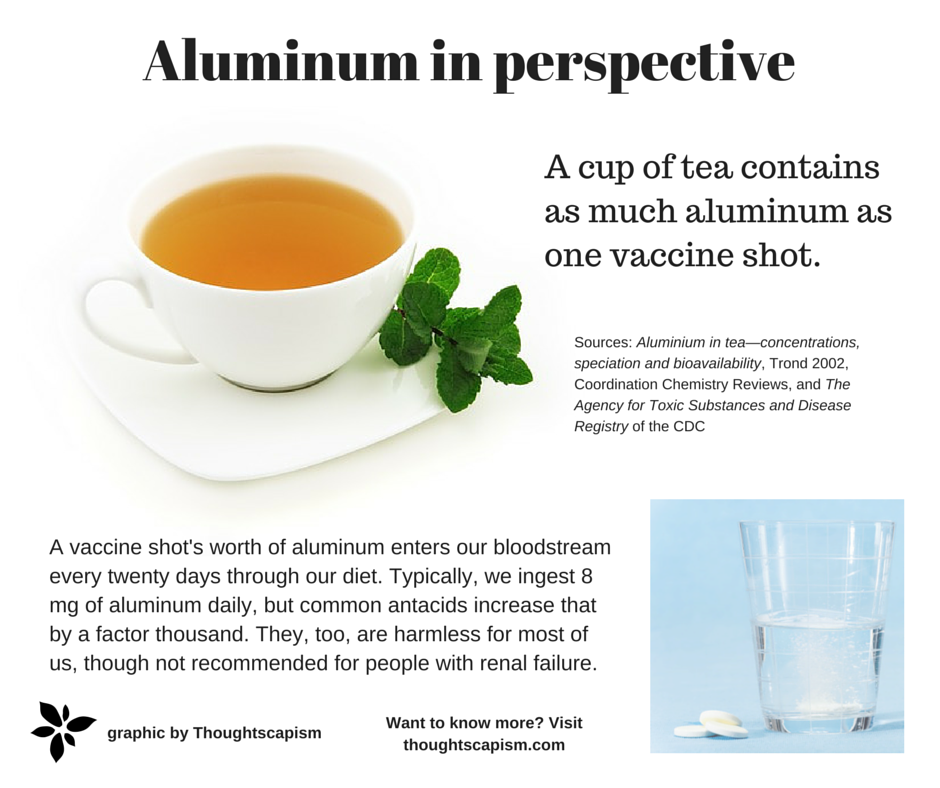
Aluminum in Perspective

Many people are concerned about vaccine ingredients. I have written elsewhere about two preservatives used in some vaccines (Mercury in retrogade and Formaldehyde in us and vaccines), but here I take a look at aluminum, which is a vaccine adjuvant used in Diptheria-Tetanus, Hepatitis, Haemofilus influenza type b, and pneumococcal vaccines (you can find aluminum concentrations for each vaccine from the Childrens Hospital of Philadelphia).

Adjuvants are substances that enhance the immunological response to the vaccine, so they help make the protection long lasting without going through the full-blown disease and its consequences. Aluminum has been broadly used as an adjuvant in vaccines for 80 years. Local reactions such as redness, swelling and/or tenderness at the injection site are common side-effects of aluminum adjuvants.Aluminum

Continue reading

Posted in health, medicine, nutrition, vaccines | Tagged , | 7 Comments

Below are a couple of independent sites hosted by medical professionals, journalists, parents and public health campaigns. I’ve found that these sites use clearly stated scientific research and other official sources as their information. Continue reading

Posted on by Thoughtscapism | Leave a comment