Risk In Perspective: Hazard and Risk Are Critically Different Things

This series is something neuroscientist Alison Bernstein and biologist Iida Ruishalme have been brewing over for a long time. Risk perception is such a big crux in science communication that it’s worth taking a moment to reflect on. We decided to cross-post it both on SciMoms and Thoughtscapism in the hopes of spreading the message far and wide.


The difference between hazard and risk is a critical distinction

Hazard and risk describe two different but related concepts. The difference may sound like an unimportant jargon-filled distinction, but this difference is critical to understanding reports of hazards and risks.

A hazard is an agent that has the potential to cause harm.

Risk measures the likelihood of harm from a hazard.

risk hazard sharksHazards only become risks when there is exposure. Sharks are a hazard. But if I never go near the ocean, I have no exposure to sharks and face no risk of a shark attack. (Granted, even if you go in the ocean, the risk of shark attack is actually very low.) Despite this difference, we tend to consider all hazards as risks, regardless of our level of exposure.

Continue reading

Posted in health, science communication | Tagged , | 8 Comments

Risk In Perspective

This series is something neuroscientist Alison Bernstein and biologist Iida Ruishalme have been brewing over for a long time. Risk perception is such a big crux in science communication that it’s worth taking a moment to reflect on. We decided to cross-post it both on SciMoms and Thoughtscapism in the hopes of spreading the message far and wide.


wk_art_risk_I_graphic-1

Common perception of dangers vs the actual hazards they pose, by Susanna Hertrich (posted with permission).

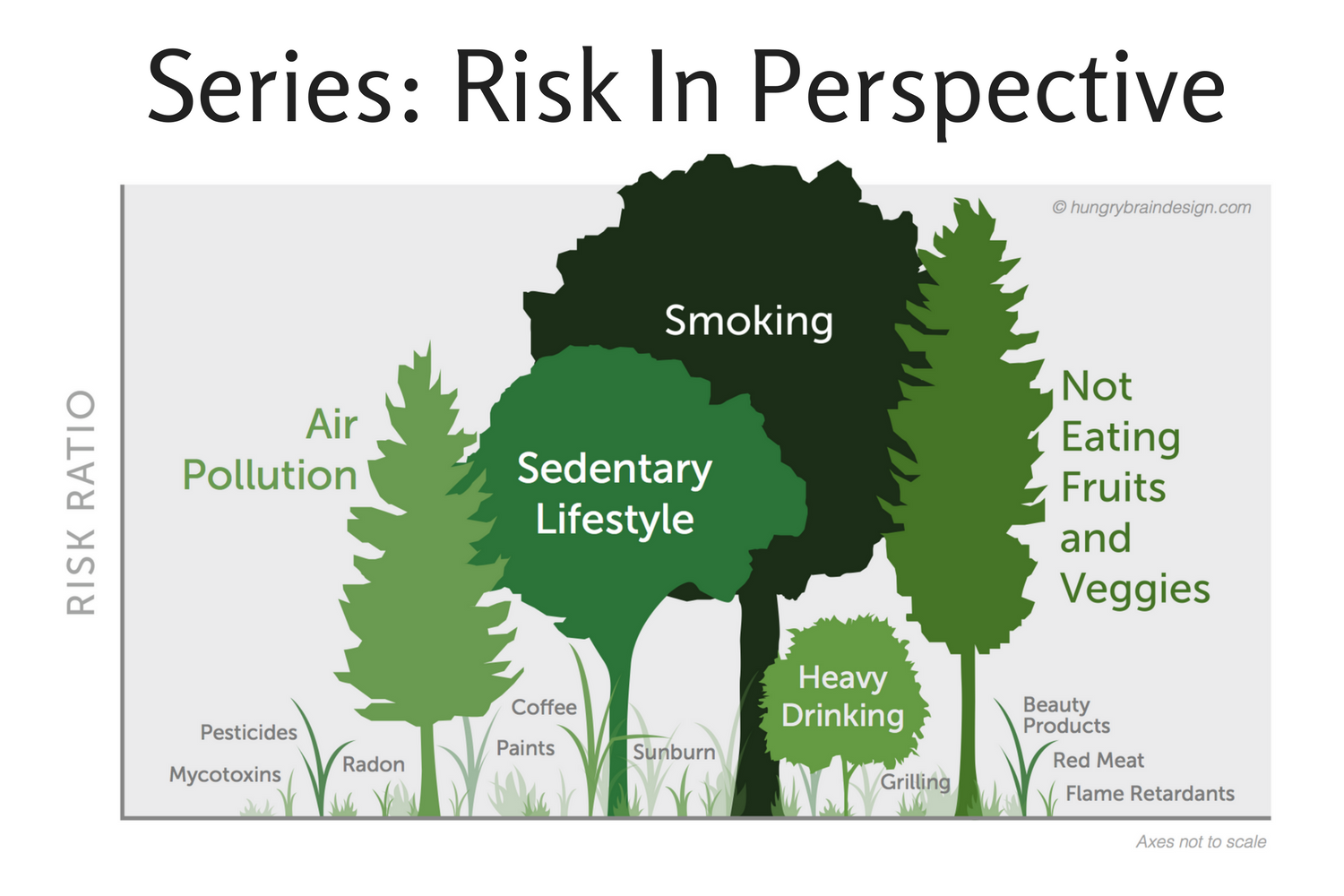
Our decisions as parents and as consumers are exercises in balancing risks and benefits. However, risks are not always intuitive and our cognitive shortcuts can lead us astray.

Misunderstandings about risk complicate our ability to make informed decisions about everything from vaccines and medical decisions to what food we eat and feed our children. Unfortunately, humans, on the whole, are intuitively terrible at assessing risk in our own lives. Our difficulty in assigning risk seems to be innate, as discussed in this piece from Undark (Know This First: Risk Perception Is Always Irrational). Continue reading

Posted in health, parenting, psychology, science communication, vaccines | Tagged , | 13 Comments

UNEP’s Narrow-minded Views on Innovation

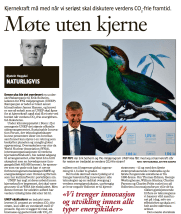
Screen Shot 2018-02-02 at 15.53.31World’s energy production needs all the innovation it can get, but UN-director Erik Solheim appears not to have gotten the memo.
GUEST AUTHOR: This piece was written by journalist Øystein Heggdal, and it was originally published in the Norwegian newspaper Klassekampen on the 2nd of February 2018. We cooperated on a translation of the article for it to appear here English.


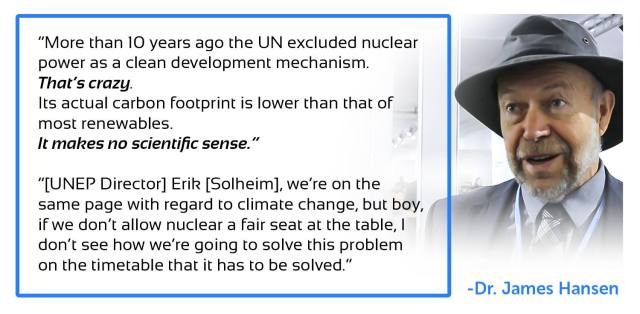
There is an ongoing petition campaign with the aim to change the politics at UN’s Environmental Program (UNEP) whose director Erik Solheim is. The campaign is lead among others by the climate scientists James Hansen, and it was started in connection to the COP23 climate meeting in Bonn last year. Solheim and the UNEP arranged the largest side-event of the meeting, called Sustainable Innovation Forum, where tech companies could present their ideas about how societies can be steered in a direction that protects the planet and which helps us avoid the problems of climate change.

no scientific sense hansen

Continue reading

Posted in climate, energy, history, nuclear, renewables | Tagged , | 1 Comment

Wolf Reintroduction Is Great, But Probably Not A Miraculous Landscape-Changer

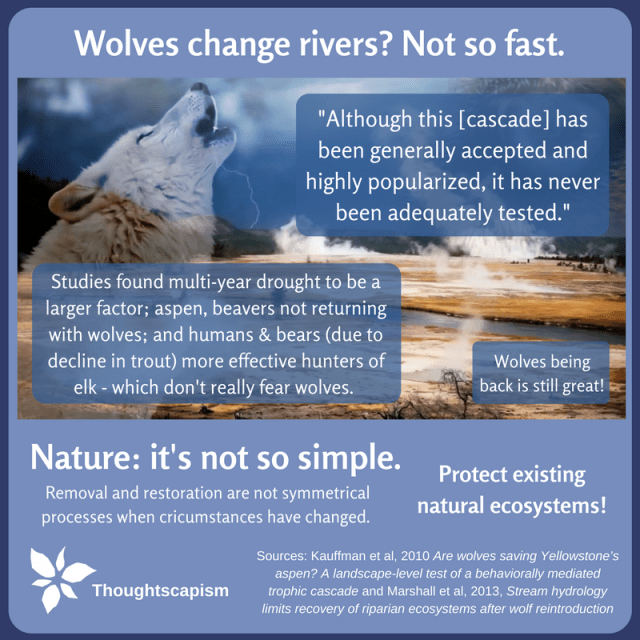
Perhaps you’ve seen one of these videoclips: the scene opens up of wolves galloping in the snow, then landscapes of rivers and mountains opening up before you. Pictures of deer and elk, bears, bison, beavers, badgers, foxes, eagles, and so on, are paraded before us to beautiful music. They are all told to be living again in harmony and balance, thanks to one factor: wolves. You hear the exalted voice of George Monbiot saying things like “Birds began to return to the park!” and “But this is where it gets truly remarkable, it turns out that reintroduction of wolves even changes the course of rivers!”

Large predators are an important part of upholding the balance of ecosystems, for sure. But does an ecosystem “miraculously” return back to normal, including its physical landscape, by introduction of one of its main predators, 70 years after its removal?

Uplifting videos, like the ones produced by the Sustainable Human and the National Geographic, certainly do a good job convincing us that this is what has in fact happened. They are truly lovely (if a tad melodramatic) stories, too. But I think they would be better if they were accurate.

Wolves change rivers not so fast.png

Continue reading

Posted in environment | Tagged , , , | 3 Comments

At the Source: Where 13 % of Swiss Electricity is Created

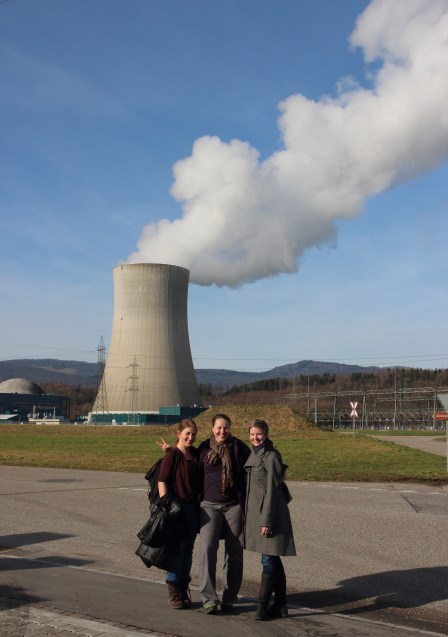
IMG_6593

On our way in to the plant with my girlfriends

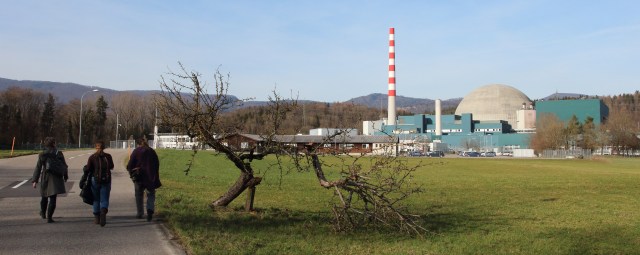
A friendly nuclear engineer I met at the screening for the movie New Fire made the off-hand mention that he might be able to give a tour of his nuclear plant, Gösgen – an offer I held onto like a leech! Yesterday it happened. It was a bit of a walk to get there from the Däniken train station, but the day was sunny and the place was not hard to find… we just followed the source of the clouds.

It is sort of amazing to realize that the little dome (to the left of the hyperboloid cooling tower) is the source of so much energy, that the mere waste heat from that process continually vaporises water enough to create decent-sized clouds.

Well at the entrance to the plant, we were met by my nuclear contact, and he handed us over to the great care of our tour guide for the day, Heinz, who had grown up playing on the greens around the power plant.

img_6601.jpg

Enter the obligatory jokes, “Look, even the trees are dead here!!” (For posteriority, let it be stated that it’s January)

Continue reading

Posted in energy, nuclear | Tagged | 7 Comments

Off the Press: Nuclear Energy Is a Fast and Inexpensive Way to Improve the World

Screen Shot 2017-12-10 at 15.25.47

This piece was originally published in the Finnish newspaper Aamulehti on Friday 8th of November 2017. The article is based on an earlier English blog piece I wrote, which was quite a bit longer than the 4500 character limit at the paper, and unlike it, included plenty of graphs and hyperlinked sources. For a long version of the topic you can head on over there. However, I felt I could hardly turn down a reader’s kind request to translate the newspaper-published piece as well. So here it is: the TL;DR version of my economical arguments around low-carbon electricity. A few graphs added. Continue reading

Posted in climate, energy, finance, nuclear, renewables | Tagged , | 6 Comments

Nuclear Energy Is the Fastest and Lowest-Cost Clean Energy Solution

I’ve joked to my friends that if there is anything that proves how important I consider the clean energy topic to be, it’s me digging into electricity pricing. I have a natural aversion to economics – I’ve demoted that aversion somewhat from the position of idealist elitism it carried back when I was a teenager (anything to do with money was about greed and not worth considering). Now I acknowledge that my prejudice toward economics is a flaw in my character which means I’m probably missing a whole lot about a fascinating and complex aspect of societal dynamics. I’ve battled that weakness a couple of times to catch a glimpse of that complexity.

So, when I used to hear people complain about nuclear energy being expensive and slow to build, I would thoughtfully nod my head, thinking: “Well, they probably have a point, it’s expensive, and it’s quite a project to build a plant. Still, it’s important because it can provide astounding amounts of reliable carbon-free energy, so we just have to stomach that slow and costly process.”

You’d think I would have learned by now about the risks of making assumptions based on hearsay?

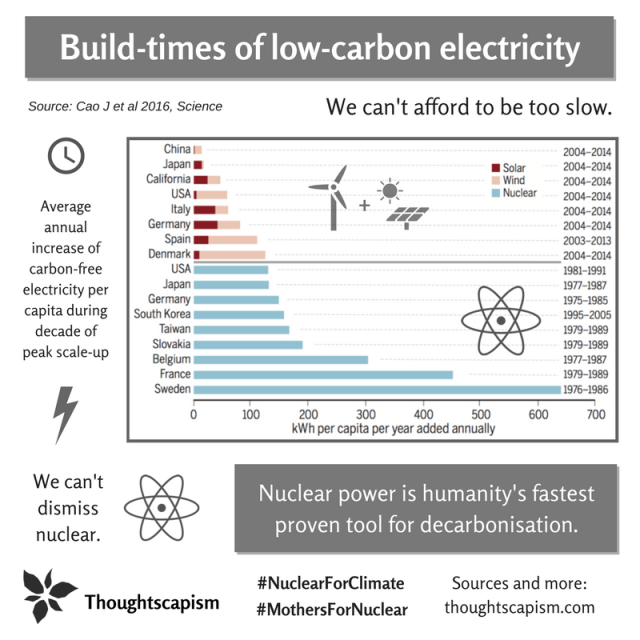
When someone pointed me to a graph comparing the best build-rates we’ve ever had on carbon-free energy over the last half a century (first the excellent one presented by Climate Gamble, then another from Cao J et al, Science, which you see below), I had to stare at it for a while to process how wrong I had been about that “slow to build” part.

How much do power plants cost- (1)

Continue reading

Posted in climate, energy, finance, nuclear, renewables, society | Tagged , , | 22 Comments

Give Nuclear a Seat at the Table

bubble igloos

I first saw the giant inflated bubble-igloos at the COP23 area at night, illuminated from inside with a green and violet light, giving them a sort of futuristic bouncy castle -vibe. The circus-sized igloos were to be the location for the UN Environmental Program’s (UNEP) Sustainable Innovation Summit (SIF) – the largest official side event of COP23. This was a major event for tech companies to present their ideas about how to steer the modern society in a direction that would help protect the planet and mitigate climate change.

This was not something for the general public – with tickets 1000 dollars a piece (500 for NGOs), the two day event, a few hundred meters from the official Bula Zone of the Bonn conference, was definitely industry centric. But not just any industry.

The UNEP had selected those it deemed most suitable for its sustainability goals. With that in mind, you might find it surprising that car and coal power companies were not only among the event’s participants, but among their gold sponsors, with their names displayed all over the event. Continue reading

Posted in climate, energy, nuclear | Tagged , , | 7 Comments

Conversations with an Anti-Nuclear Protester, Take Two

In the aftermath of the controversial US panel on energy at COP23, Lenka Kollar was the only panelist who stayed behind and gave interviews to several camera crews. These included one with a pitbullish German reporter, whose demands for exact price of future nuclear energy on any number of different markets prompted me to write about a few curious themes I’ve witnessed in discussions about energy economics in: The Right Price for Saving the Planet Depends on the Energy Form. Lenka also gave another interview to Democracy Now – this material has unfortunately not seen the light of day so far.

We meet again

Among the thinning group of people in the meeting room I had noticed a few familiar faces from the anti-nuclear protest which me and Eric Meyer from Generation Atomic had happened by two days earlier, with heated consequences. I recognised one lady, who had actually talked to us, and she got a turn to interview Lenka.

protestors

The New Mexican lady might be the one in the middle of the yellow ‘indigenous people against nuclear’ -themed banner on stage. The black-clad man who put the police on me is definitely in the crowd watching.

For background: this lady’s anti-nuclear fellows had threatened us with a beating, screamed at us, and shoved Eric around – you can read more about that in Anti-nuclear protesters get up close & personal, try to get me seized by the police.

She asked Lenka the very same questions about uranium mining which me and Eric from Generation Atomic had tried to answer the previous time. I was glad, this time, to hear her calmly listen to Lenka’s answers. Perhaps, just perhaps, she might realize that we must to look at the environmental harm from mining in context – in connection to mining required by every kind of energy production, for instance – to begin making fair comparisons on their impacts. Continue reading

Posted in climate, epistemology, nuclear, science communication | Tagged , , | 3 Comments

The Right Price for Saving the Planet Depends on the Energy Form

The controversial US energy panel at COP23 was over, and people began pouring out of the room at the climate conference in Bonn. While most panelists left, nuclear engineer Lenka Kollar from NuScale stayed and gave interviews to several camera crews. I was impressed by how she continued to answer countless of questions in a calm and friendly fashion. One of the interviews was with Amy Goodman of Democracy Now, but so far I haven’t seen any published material relating to their interviews of Lenka or Eric* from Generation Atomic.

The segregated economics of low-carbon energy

Meanwhile, Lenka continued kindly answring questions. There was one German interviewer, in particular, who grilled her on the exact price per kWh on her suggested type of nuclear power. Even after Lenka gave him the numbers for the US, he kept demanding to hear the price in other countries. Lenka politely noted that each market was different, and she couldn’t give him a specific number on that. He kept insisting, citing prices on solar panels, trying to pit renewables against nuclear – an unfortunate but rather common tenet of many environmental activists, which distracts from the important discussion on the common goal of decarbonisation.

screen-shot-2017-11-17-at-11-54-32.png

The price argument reminds me of a strange trend I have encountered several times among a subgroup of renewable proponents: after they no longer contest the data that shows nuclear to be one of the safest energy forms, as well as one of the most efficient ways of producing carbon-free energy, suddenly the argument shifts to ‘but it costs too much’. It is as if saving human lives and the environment -arguments go out the window.

Continue reading

Posted in climate, energy, finance, nuclear, renewables | Tagged , | 12 Comments